Personalized mRNA Cancer Vaccine Shows Promise in Melanoma: INTerpath-001 and Future Cancer Care
Nov 11, 2026
What if cancer treatment could be designed around the unique genetic features of an individual patient’s tumor?
Precision oncology helps doctors tailor care by considering cancer type, stage, and genetic changes in the tumor. A newer investigational approach goes a step further: it looks for mutations that distinguish a patient’s cancer cells from their healthy cells, then uses that information to help the immune system recognize the tumor.
New results from the Phase III INTerpath-001 trial suggest this strategy may have an important role in melanoma. Merck and Moderna recently announced positive results from their study of intismeran autogene. This mRNA-based individualized neoantigen therapy (also called V940 or mRNA-4157) met key measures of efficacy when given with pembrolizumab (Keytruda) after surgery for high-risk melanoma.
Importantly, intismeran autogene is an investigational therapy. It is not yet an approved treatment, and the reported findings apply specifically to patients with completely resected stage IIB-IV cutaneous melanoma. These results do not show that personalized mRNA vaccines work for sarcoma, other rare cancers, or metastatic cancer.
What is an mRNA-based individualized neoantigen therapy?
mRNA is a temporary set of biological instructions for cells to make proteins. mRNA-based vaccines were first widely adopted during the COVID-19 pandemic. Researchers are also studying how mRNA may be used to help the immune system recognize cancer.
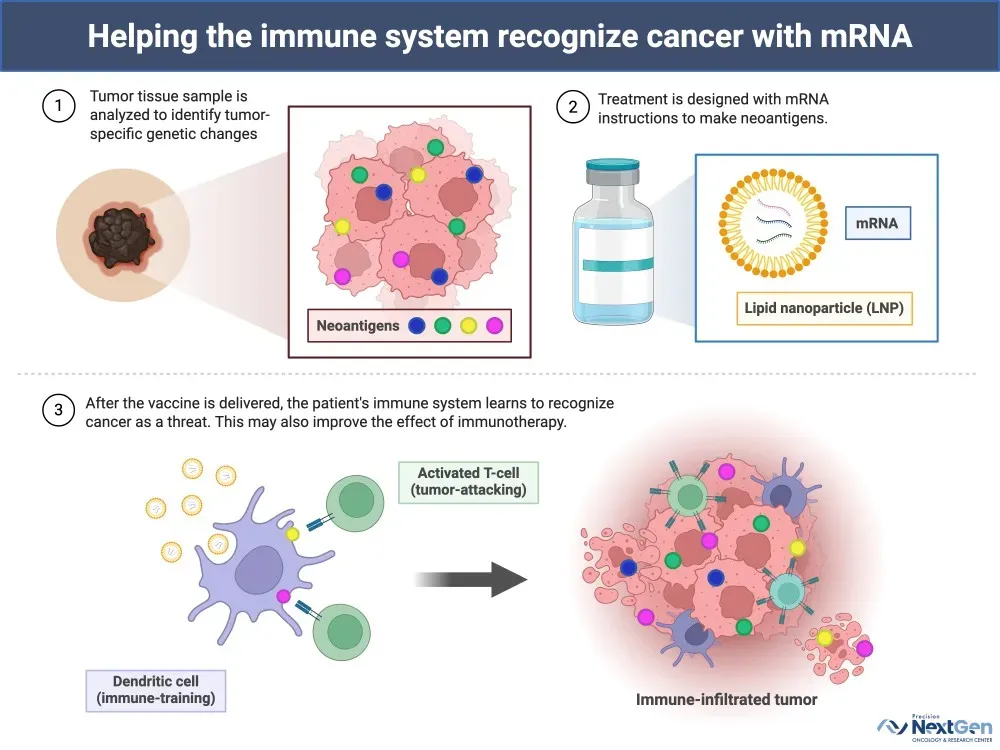
Cancer cells can develop genetic changes over time. Some changes create protein markers called neoantigens. Healthy cells do not have these markers. Neoantigens are specific to a patient’s tumor and can potentially serve as targets for an immune response.
For intismeran autogene, a patient’s tumor is analyzed to identify specific genetic changes. Researchers then make a personalized mRNA treatment. It contains instructions for up to 34 neoantigens from that patient’s tumor. After treatment, the goal is to help the immune system recognize and attack the cancer cells.
This is not a preventive vaccine in the usual sense. Rather, it is a therapy designed for a person who has already been diagnosed with cancer.
What did INTerpath-001 study?
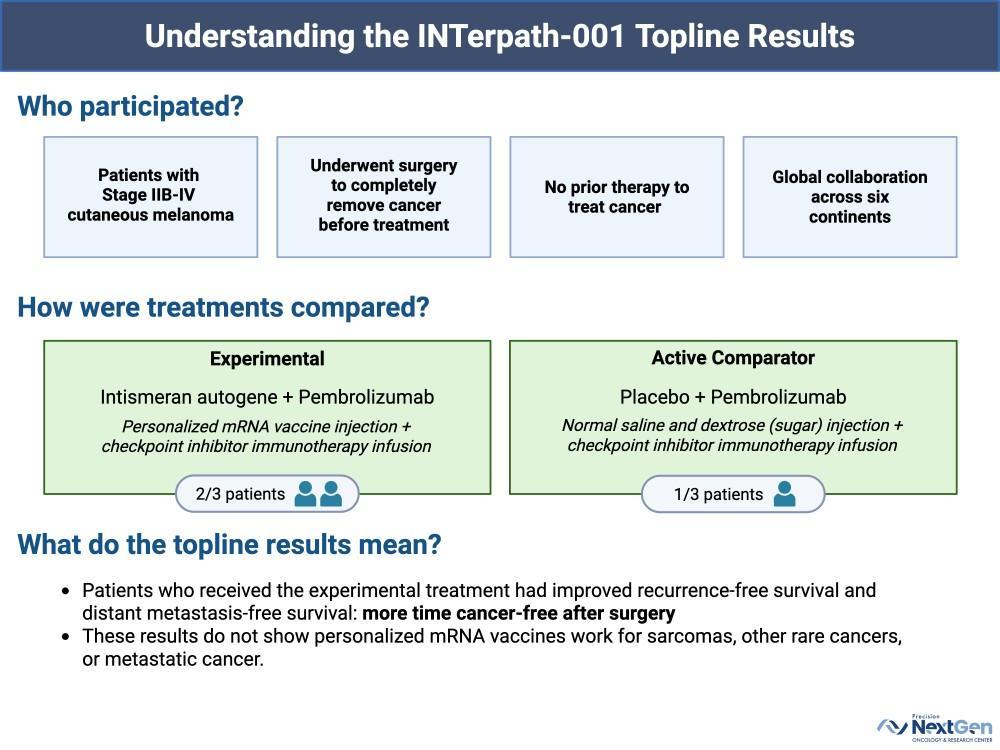
INTerpath-001 is a global Phase III clinical trial. It compares intismeran autogene plus pembrolizumab with pembrolizumab alone. The trial enrolled patients with stage IIB-IV cutaneous melanoma who underwent surgery to completely remove their cancer before starting treatment. Pembrolizumab, also known by the brand name Keytruda, is an immunotherapy already used in this setting.
Phase III trials generally compare an investigational treatment with an established treatment or another control in a larger group of patients. These studies help determine whether an approach provides a meaningful benefit, characterize side effects more fully, and inform potential regulatory approval.
What do the results mean?
Patients who received the combination of intismeran autogene and pembrolizumab had longer recurrence-free survival, meaning more time cancer-free, compared to patients who received pembrolizumab alone. Additionally, patients who received both treatments were less likely to have the cancer spread to distant parts of the body.
In practical terms, the combination of intismeran autogene plus pembrolizumab may lower the risk that melanoma returns or spreads distantly after surgery.
These are the first reported positive Phase III results for an individualized neoantigen therapy and an mRNA-based cancer therapy. More detailed data from INTerpath-001 were presented at the European Society for Medical Oncology (ESMO) meeting in Madrid. Whether this combination treatment helps people live longer, and how risks and benefits compare across different patients, will require review of the complete data.
Why this matters beyond melanoma
For patients and families affected by sarcoma and other rare cancers, this news is encouraging as a scientific advance. Rare cancers often have fewer established treatment options and may be underrepresented in large clinical trials. In the future, individualized neoantigen therapies may help patients whose tumors have unique genetic changes.
At the same time, immunotherapy might not be right for every patient. Tumors differ in how well immune cells can enter them. They also differ in how well they can avoid the immune system. These differences may affect how well a personalized mRNA vaccine can help a patient.
Important practical considerations also remain, including how quickly a personalized therapy can be manufactured, how individualized vaccines should be combined with other available treatments, and how affordable and accessible individualized treatment will be if it becomes approved. Still, INTerpath-001 offers important early evidence that a treatment designed from a patient’s own tumor may strengthen the effects of immunotherapy in the appropriate clinical setting.
Patients interested in learning whether molecular testing, a second opinion, or a clinical trial may be relevant to their care are encouraged to discuss these options with their oncology team. Precision NextGen Oncology and Research Center offers in-person care in Beverly Hills and second opinion services for patients navigating complex cancer diagnoses.
Sources: